Web Vulnerability Scanner
A modular web vulnerability scanner built in Python. Ships as both a CLI and a web app with a FastAPI backend, Dockerized and deployed to Render.
Visit Project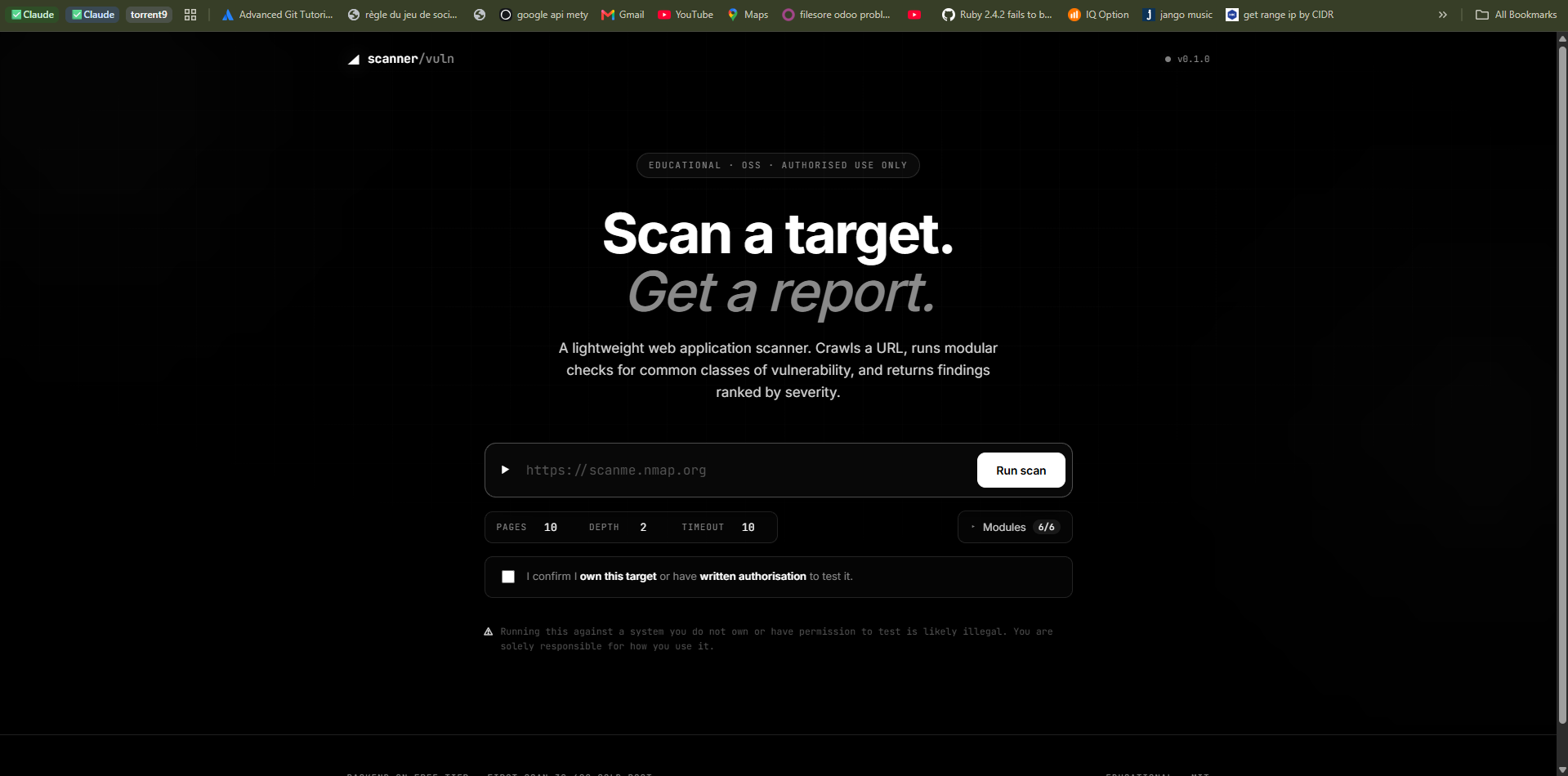
Overview
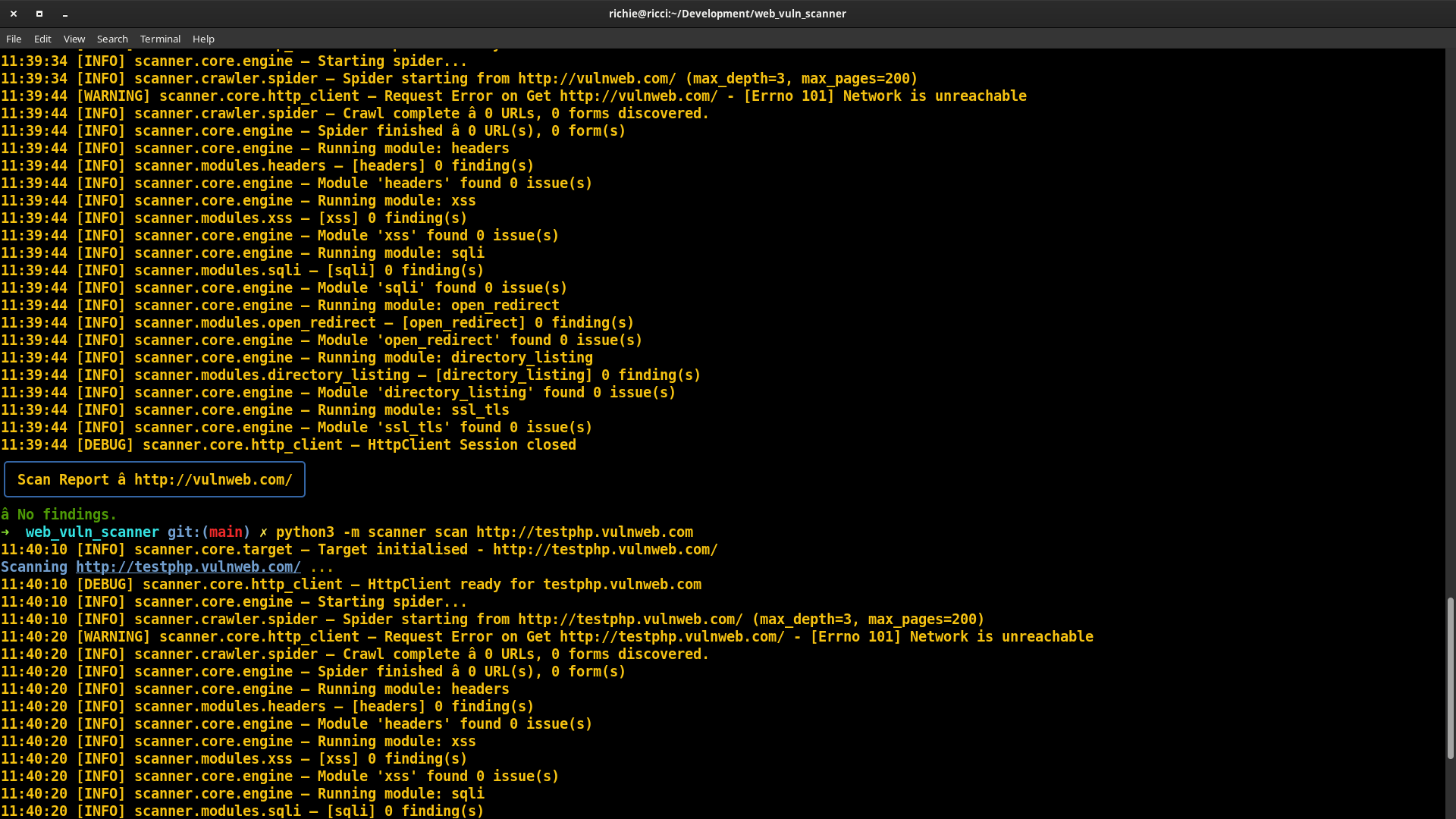
Heads up: the backend runs on Render's free tier and sleeps after 15 min of inactivity. First scan after a cold period may take 30-60s to wake it up. Started life as a Python CLI tool that crawls a target and runs modular checks for XSS, SQL injection, open redirects, directory listings, missing security headers, and weak SSL/TLS configuration. The engine is module-based (BaseModule ABC + MODULE_MAP registry) so adding a new check is one file. Then wrapped the engine in a FastAPI layer with /modules and /scan endpoints, built a monochrome web UI that talks to the API over the same origin, added a safety gate (authorized checkbox + resource caps) so the public instance can't be weaponized, Dockerized the whole thing, and shipped it to Render — same deploy pattern established with Spider_Commerce.
Tech Stack
Process
- Designed a modular scanner architecture with a BaseModule ABC and a MODULE_MAP registry so individual vulnerability modules plug in without touching the engine.
- Built a spider with configurable max depth, max pages, and timeout; each module receives the crawled URLs and forms and returns typed Finding objects.
- Implemented six modules: XSS, SQL injection, open redirect, directory listing, missing security headers, and SSL/TLS configuration checks.
- Wrapped the engine in a FastAPI layer with /modules and /scan endpoints, Pydantic schemas on both ends for validated input and typed JSON output.
- Added a safety gate on /scan (authorization checkbox required, hard caps on crawl size/timeout) so the public instance stays an educational tool.
- Built a monochrome web UI (vanilla HTML/CSS/JS) served from the same FastAPI process; results render as a responsive grid with severity-weighted accents.
- Dockerized with a slim Python base, pinned dependencies, and a which-uvicorn sanity check in the build so missing deps fail loudly, then deployed to Render.